
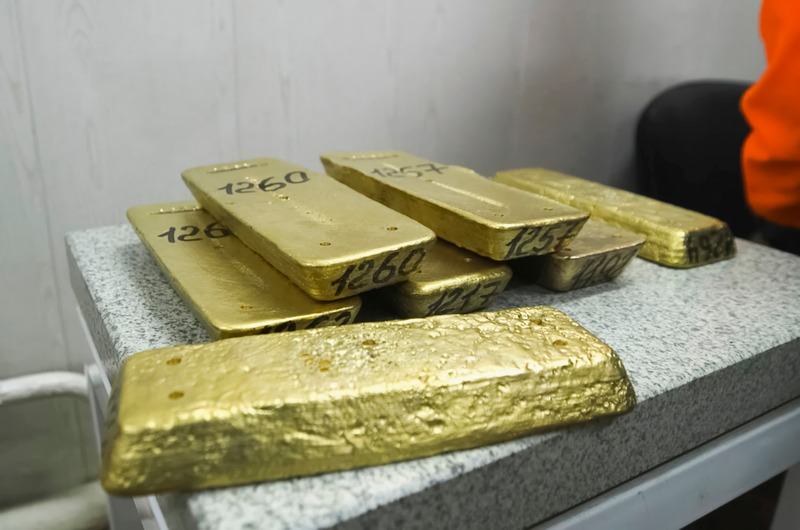
Today, that model is being disrupted. Increasingly, institutional capital is bypassing the traditional chain entirely and seeking direct relationships with gold mining companies selling gold at the earliest possible point in the supply chain. This shift is because of three converging factors: the hunger for superior pricing, the demand for airtight provenance documentation, and the strategic imperative of securing long-term supply in a market facing increasing demand pressures.
The most efficient transaction in the precious metals market is the one with the fewest participants. Every entity standing between the point of extraction and the final buyer represents a margin. That’s a slice of value that accrues to facilitators rather than principals.
Eliminate every intermediary between the source and your vault. Discover the strategic pricing and compliance advantages of working directly with gold mining companies selling gold through established East African trade corridors.
For decades, the global gold trade operated through a rigid, multi-layered structure. The structure involved mining operations selling to aggregators, aggregators selling to regional traders, traders selling to international refineries, and refineries selling to dealers. The end buyer, whether a central bank or a private wealth fund, was separated from the source by four or five intermediaries, each extracting a fee.
In this article, we will examine why the direct-sourcing model has gained momentum, how it operates in practice within the world’s most prolific emerging gold regions, and what criteria sophisticated buyers use to identify and vet legitimate mining operations offering direct sales.
The Economics of Disintermediation
To understand the value of purchasing gold directly from gold mining companies, one must first appreciate the cumulative costs of the traditional supply chain.
Consider a simplified example. A kilogram of raw gold is extracted from an alluvial deposit. The artisanal mining cooperative sells it to a local aggregator at 88% of the LBMA spot price. The aggregator consolidates multiple small purchases and sells to a regional exporter at 92%.
The exporter ships to an international refinery, which purchases at 96%. The refinery processes the gold into standardized bullion and sells it to a dealer at 99.5%. The dealer then sells to the end investor at 100.5% (spot plus a retail premium).
In this chain, the original miners captured only 88% of the gold’s market value. The remaining 12.5% was distributed among intermediaries. For the end buyer, this means they paid a 0.5% premium on top of a price that was already marked up multiple times.
Now consider the alternative. An investor establishes a direct relationship with a licensed mining operation or a vertically integrated entity that controls the extraction and initial processing. They purchase refined dore bars at 96% of spot, the same price the international refinery would have paid. By stepping into the position previously occupied by the refinery, the investor captures the downstream margin for themselves.
This is the fundamental economic logic driving the search for gold mining companies selling gold without intermediaries.
Why Mining Operations Are Now Selling Directly
Historically, mining companies, particularly small-scale and artisanal operations, lacked the infrastructure to engage directly with international buyers. They did not have corporate bank accounts capable of receiving SWIFT transfers. They lacked the legal expertise to navigate export regulations. Also, they lacked the security apparatus to store large quantities of inventory safely.
This has changed, particularly in the emerging gold hubs of East Africa.
The professionalization of the mining sector in regions such as the Great Lakes has created a new class of operation: the vertically integrated mining entity. These are companies that control the full value chain from extraction to export. They operate licensed mining concessions, maintain secure vaulting facilities in metropolitan trade centers, employ in-house assaying and refining capabilities, and hold the regulatory permits required to export legally.
For these entities, selling directly to international buyers is not merely possible—it is preferable. By cutting out the regional aggregators and traders, they retain a larger share of the value they create. The incentives of the mining company and the end buyer are now perfectly aligned: both benefit from eliminating intermediaries.
The Compliance Advantage of Source-Level Purchasing
Beyond pricing, the direct-sourcing model offers a critical advantage amid heightened regulatory scrutiny. That advantage is the unimpeachable provenance.
When gold passes through multiple hands, its origin becomes obscured. A refinery receiving metal from a dozen different traders may blend material from conflict zones with ethically sourced gold, creating a compliance nightmare for the end buyer. The resulting bullion cannot be certified as conflict-free because its true origin is unknown.
On the other hand, purchasing gold directly from gold mining companies provides a clear, unbroken chain of custody. The buyer knows the exact GPS coordinates of the extraction site. They can verify the mining license and cross-reference it with government registries. They can obtain ICGLR (International Conference on the Great Lakes Region) certification that traces the specific parcel of gold from the pit to the export facility.
This level of traceability is increasingly non-negotiable for institutional buyers. Major refineries in Switzerland and the UAE are rejecting gold that cannot demonstrate clean provenance. Banks are refusing to finance transactions involving opaque supply chains. By sourcing directly from licensed mining operations, the sophisticated buyer future-proofs their inventory against the tightening regulatory environment.
The Operational Workflow: From Mine to Vault
Understanding how a direct purchase from a mining operation unfolds in practice helps the buyer prepare for the process and identify potential risks.
Stage 1: Initial Engagement
The buyer submits a Letter of Intent (LOI). It specifies the desired quantity and target purity. The mining company responds with a Full Corporate Offer (FCO) detailing the origin of the gold, current inventory, pricing formula, and terms of sale.
Stage 2: Documentation Exchange
Before any travel or financial commitment, both parties exchange compliance documents. The buyer provides proof of funds and corporate registration. The seller provides mining licenses, export permits, and recent assay reports. This mutual vetting phase establishes the legitimacy of both counterparties.
Stage 3: Physical Inspection and Assay
The buyer or their representative travels to the trade hub, typically a secure metropolitan center with modern vaulting and laboratory facilities. The gold is presented for inspection. A random sample is selected and subjected to fire assay at an independent, government-approved laboratory. The assay report determines the exact purity and, consequently, the final price.
Stage 4: Payment and Export
Upon satisfactory assay results, the buyer remits payment via SWIFT transfer to the seller’s corporate account. The mining company then processes the export documentation, pays applicable royalties and taxes. It then arranges secure transport to the international airport. The gold is shipped to the buyer’s designated refinery or vault.
Stage 5: Final Settlement
Depending on the agreed Incoterms, a final assay may be conducted at the destination refinery. Any minor discrepancies in weight or purity are reconciled financially. The transaction is complete.
The Strategic Value of Long-Term Relationships
While spot transactions offer immediate value, the greatest returns in the direct-sourcing model come from establishing ongoing relationships with reliable mining operations.
A long-term supply agreement provides several strategic benefits:
- Price Stability: Negotiated pricing formulas protect the buyer from short-term market volatility.
- Supply Security: In a market where demand increasingly outstrips readily available supply, a guaranteed allocation from a producing mine is a significant competitive advantage.
- Operational Efficiency: Repeat transactions with a trusted counterparty reduce due diligence costs and accelerate the procurement cycle.
For gold mining companies that sell gold directly, these relationships are equally valuable. A reliable international buyer provides consistent revenue. This reduces their dependence on local aggregators who may offer inferior terms.
The East African Context: A Model Environment
While the direct-sourcing model can theoretically be applied anywhere gold is mined, certain regions offer particularly favorable environments for international buyers.
The Great Lakes region of Central and East Africa combines exceptional geological endowment with an increasingly sophisticated commercial infrastructure. The DRC has some of the world’s richest gold deposits. Neighboring Uganda has developed the regulatory frameworks, banking systems, and logistics networks required to facilitate compliant international trade.
This geographic pairing enables international buyers to access mine-level pricing from prolific geological zones while executing transactions in a stable, well-regulated commercial hub. It is this combination of upstream access with downstream security that has made the region a focal point for institutional capital seeking direct relationships with mining operations.
Establish a Direct Relationship with the Source
The gold market rewards those who understand its structure. They can position themselves accordingly. For too long, the value created at the point of extraction was siphoned away by layers of intermediaries before reaching the end buyer. Today, the direct-sourcing model offers an alternative path, one that delivers superior pricing, unassailable provenance, and strategic supply security.
Success in this model requires moving beyond passive consumption of refined bullion and actively engaging with gold-mining companies that sell gold directly at the source. It requires rigorous due diligence, an understanding of regional dynamics, and a commitment to compliance. But for those willing to invest the effort, the returns, both financial and strategic, are substantial.
We operate a vertically integrated supply chain connecting institutional buyers with ethically sourced, fully documented gold from the Great Lakes region. Contact our team today to discuss our mining operations, review our compliance credentials, and explore how a direct partnership can transform your precious metals procurement strategy.
Related Links
- Buy Gold In Africa
- Buy Gold Directly From Supplier
- Buy Gold Bullion Online
- Raw Gold Nuggets For Sale
Estimated reading time: 7 minutes


