Estimated reading time: 8 minutes
In the high-stakes arena of international commodities, the greatest risk to capital preservation is not price volatility! It is the legal opacity of the supply chain. While the spot price of gold fluctuates based on global macroeconomic trends, the ability to physically secure, export, and monetise that gold depends entirely on the regulatory standing of your counterparty. This is why the smartest institutional capital entering the East African market has ceased seeking “brokers” and now strictly limits exposure to government-approved gold sellers.
Mitigate legal risk and secure your capital by partnering exclusively with government-approved gold sellers in Kampala. Discover how Uganda’s regulatory framework provides a sovereign shield for international bullion transactions.
The distinction is profound. In the past, the gold trade in the Great Lakes Region, specifically the flow of minerals from the Democratic Republic of the Congo (DRC) into Uganda, was often characterised by informal networks. Today, that landscape has been radically transformed by legislative overhauls and strict enforcement by the Ugandan Directorate of Geological Survey and Mines (DGSM).
For the modern investor, a government approval is not merely a license hanging on a wall. It’s a “sovereign shield.” It guarantees that the gold you purchase has passed through a vetting process. Such processes provide you with immunity from the risks of asset seizure, smuggling charges, and reputational damage.
In this article, we will synthesise the legal, financial, and logistical advantages of working strictly within this regulated framework. We explain how you can verify that you are indeed dealing with the legitimate architects of the Kampala gold trade.
The Regulatory Renaissance: Contextualising the Market
To understand the value of government-approved gold sellers, you must first understand the shift in Uganda’s mining policy. With the introduction of the new Mining and Minerals Act, the Ugandan government effectively drew a line in the sand. The objective was to transition the sector from a transit hub for raw minerals into a value-added processing centre that adheres to international standards.
This shift created a bifurcated market. On one side, there are the illicit traders. Such traders often operate out of hotel lobbies or unmarked offices, offering gold at steep discounts, but cannot provide a paper trail. On the other side are the licensed entities. These companies have invested in physical infrastructure, including refineries and vaults. They pay corporate taxes and operate under the direct oversight of the Ministry of Energy and Mineral Development.
For international buyers, this bifurcation simplifies decision-making. The illicit market offers low prices but 100% risk of total loss. The regulated market offers fair market pricing (LBMA minus a reasonable margin) with near-zero legal risk.
The Anatomy of Approval: What Defi Government-Approved Gold Sellers?
Many entities claim to be “authorised,” but true government approval is a specific legal status comprised of three distinct pillars. When vetting a partner in Kampala, you are looking for this trifecta of documentation.
1. The Mineral Dealer’s License (MDL)
This is the foundational document issued by the DGSM. It grants the holder the legal right to buy, sell, and deal in minerals. However, a savvy buyer knows to look deeper.
- The Validity Date: These licenses are renewed annually. An expired license is a red flag.
- The Scope: Does the license specifically cover gold? Some licenses are for base metals or gemstones only.
- The Entity Name: The name on the license must match the corporate bank account where you are asked to send funds. Third-party payments are strictly prohibited by anti-money laundering (AML) laws.
2. The Export Permit
While the MDL allows a company to trade, it does not automatically allow it to export. Government-approved gold sellers must apply for a specific Export Permit for each shipment. This document is the “exit visa” for your gold. It proves to the Ugandan Revenue Authority (URA) that the specific bars in your shipment have been declared, assayed, and taxed. Without this, your gold is considered contraband at the airport.
3. The ICGLR Certificate
This is the ethical component of government approval. The International Conference on the Great Lakes Region (ICGLR) mandates a certification mechanism. This ensures that minerals are conflict-free. A government-approved seller in Uganda can provide this certificate. You can use it to trace the gold back to a “green-flagged” mine site in the DRC. This document allows you to sell gold to major refineries in Dubai or Switzerland without triggering sanctions.
The Financial Logic of Compliance
Why should a buyer care about the seller’s paperwork? Because in the global banking system, compliance is currency.
When you attempt to wire large sums of USD or Euro to Kampala, your correspondent bank (likely in New York or Frankfurt) will trigger a compliance hold. They will demand to know the source of the funds and the beneficiary’s legitimacy.
If you are dealing with government-approved gold sellers, this process is fluid. You provide the bank with the seller’s license number, the FCO (Full Corporate Offer), and the draft export documents. The bank verifies the entity against international databases and releases the funds.
Conversely, if you are dealing with an unlicensed broker, the bank will flag the transaction as high-risk. Best-case scenario: the funds are returned, and you lose weeks. Worst-case scenario: the funds are frozen pending an investigation into money laundering. Partnering with approved sellers is the only way to ensure your capital can actually move across borders.
The Chain of Custody: How Approval Works in Practice
Let’s synthesise this information by walking through a standard transaction. This workflow illustrates how government oversight protects the buyer at every stage.
Step 1: Importation and Declaration
When raw gold arrives from the DRC, a government-approved seller declares it at the border. It is weighed and logged into the national mineral tracking system. This establishes the asset’s legal entry.
Step 2: Refining and Assaying
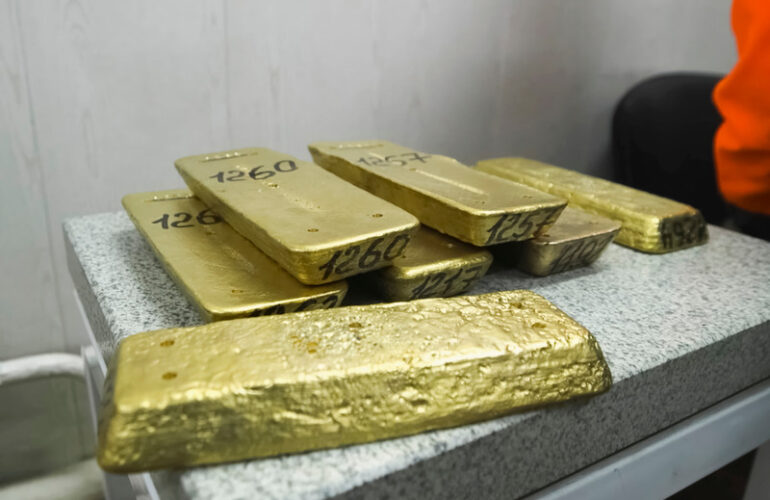
The gold moves to a licensed refinery in Kampala. Here, under the potential observation of government inspectors, it is smelted into dore bars. The DGSM conducts an independent assay to verify purity. This government assay is critical. It prevents the seller from inflating the purity claims. You are paying based on government-verified numbers, not the seller’s word.
Step 3: Taxation and Royalties
Before export, the seller pays the necessary royalties. This is typically a percentage of the value. Government-approved gold sellers cannot obtain an export permit until these taxes are cleared. This protects the buyer from having goods seized at the airport due to unpaid state debts.
Step 4: The Secure Handover
Finally, the gold is transported to Entebbe International Airport. Because the seller is approved, they have access to the secure cargo area. Customs officials review the permit, stamp the documents, and seal the shipment. The “Sovereign Shield” is now complete. The gold is legally yours and legally exported.
How to Conduct Due Diligence on Government-Approved Gold Sellers
Knowing the theory is valuable; applying it is profitable. Here is a unique, actionable guide to independently verifying a seller’s status before you board a plane to Kampala.
The “Trust but Verify” Protocol:
- Request the License Number Early: Don’t wait for the contract phase. In your initial email exchange, ask for a scan of their current Mineral Dealer’s License.
- Contact the Ministry Directly: This is a step 90% of buyers skip. You can contact the Ugandan Ministry of Energy and Mineral Development (MEMD) via their official channels to verify if a license number is active and in good standing. A legitimate seller will encourage you to do this.
- Check the URA Tax Clearance: Ask the seller for their Tax Identification Number (TIN) and a recent Tax Clearance Certificate. An entity that pays its taxes intends to stay in business. Scammers do not pay taxes.
- Audit the Bank Account: Ensure the seller uses a Tier-1 bank in Uganda. Banks perform their own rigorous KYC (Know Your Customer) on these companies. If a major bank is willing to host their corporate account, it is a strong vote of confidence in its government-approved status.
The “Cheap Gold” Fallacy vs The Value of Security
We must address the elephant in the room: price.
Unlicensed brokers will often offer gold at 10% to 20% below the spot price. They claim this is possible because they “don’t pay taxes” or “source directly from bush miners.” This is a siren song for the inexperienced.
Government-approved gold sellers operate on tighter margins. They pay taxes, they pay for security, and they pay for compliance. Consequently, their discount to the LBMA price is modest, typically covering the buyer’s logistical costs and a small profit margin.
However, the value proposition is not in the discount; it is in the certainty.
- Buying from a broker at -15% usually results in a 100% loss of capital (theft or fraud).
- Buying from an approved seller at -3% results in a 100% realisation of the asset.
In institutional finance, a guaranteed 3% ROI in a matter of days (the time it takes to fly and sell the gold) is an incredible return. A potential 15% return with a high probability of total loss is gambling, not investing.
Stop Gambling With Your Capital
The era of the “wild west” in the East African gold trade is closing. It is being replaced by a modernised, digitised, and regulated ecosystem designed to welcome international capital while protecting national resources.
For the serious buyer, the path forward is clear. You must align your operations with government-approved gold sellers. These are the entities that have survived the state’s scrutiny. They have established the infrastructure for refining and built the banking relationships necessary for global trade.
By choosing an approved partner, you’re not just buying gold. You’re buying the peace of mind that comes with Sovereign Backing. You’re buying a frictionless export process and a clean compliance record for your bank. With this, you can be assured that your investment is ethically sourced.
We invite you to engage with a fully licensed, compliant, and transparent partner. Contact us today to view our credentials, verify our government standing, and begin a secure, profitable relationship in the Kampala gold market.
Related Links