Refined Gold Sellers. In institutional commodities trading, the true cost of an asset is measured not just by its acquisition price, but by the speed with which it can be converted back into liquid capital. When constructing a precious metals procurement strategy, wealth managers and corporate buyers face a persistent dilemma. However, when they buy raw, unrefined gold directly from extraction zones, they get the biggest discounts to the spot price. However, it traps capital in a lengthy cycle of logistical delays, smelting bottlenecks, and metallurgical uncertainty.
Conversely, purchasing finished bullion from destination markets such as Zurich or London offers immediate liquidity but forces the buyer to surrender all upstream margin to a chain of intermediaries.
Maximize the velocity of your capital by sourcing directly from origin-based refined gold sellers. Discover how purchasing processed bullion at the source eliminates metallurgical risk and accelerates global liquidity.
To solve this equation, sophisticated capital is adopting a highly efficient hybrid strategy: targeting the geographic source of the metal, but bypassing the raw market entirely in favor of origin-based refined gold sellers.
Engaging with vertically integrated trade houses located in advanced transit hubs, investors can acquire processed, homogenized gold at upstream pricing. The Kampala corridor has some of the best trade houses. These play the role of the value-addition gateway for the Democratic Republic of Congo (DRC. This approach effectively bridges the gap between deep discounts and instant bankability.
In this article, we will examine the financial mechanics of capital velocity and the hidden costs of the unrefined trade. Read all the way to thee nd if you want to know why partnering with entities that process gold at the source represents the ultimate optimization of the modern supply chain.
The Hidden Penalty of the Unrefined Trade: Time-to-Liquidity
To appreciate the value of buying refined metal at the origin, one must first understand the financial friction of buying it in its raw form.
When an investor purchases raw gold dust or unsmelted nuggets, they are acquiring an unfinished product. Before that asset can be leveraged, borrowed against, or sold to a major financial institution, it must undergo a rigorous transformation. It must be exported from the origin country, transported to a foreign refinery, smelted, chemically parted, assayed, and finally cast into standardized bars. Refined Gold Sellers.
In the high-stakes environment of global finance, this process introduces a severe “time penalty.” If your capital is locked in a raw commodity that is sitting in a customs queue or waiting for a slot at a Swiss refinery, that capital is entirely unproductive. Furthermore, commodity markets are dynamic. A week-long delay in refining can expose the buyer to adverse movements in the London Bullion Market Association (LBMA) spot price.
By the time the raw gold is finally converted into a liquid asset, the costs of logistics, refining fees, and lost time have heavily eroded the initial “deep discount” that made the raw purchase seem attractive.
The Strategic Middle Ground: Origin-Based Refined Gold Sellers
The most effective way to eliminate this time penalty without sacrificing the upstream margin is to shift the processing burden to the supplier. This is the structural advantage provided by refined gold sellers operating within primary resource corridors. Refined Gold Sellers.
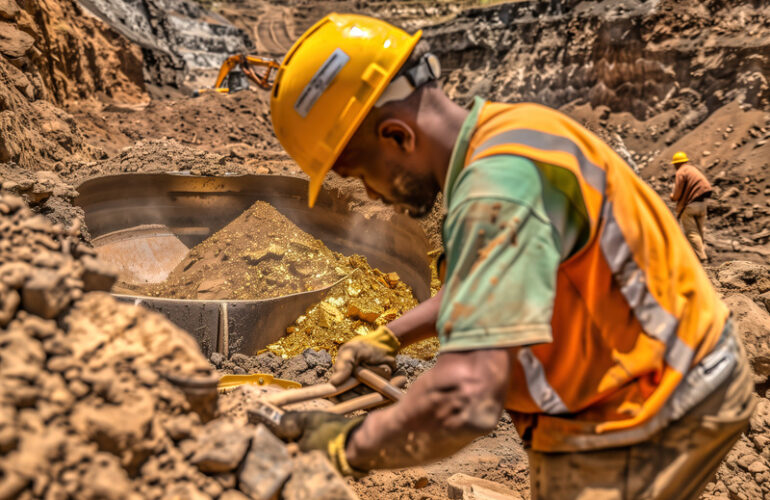
Rather than acting as mere exporters of raw African dust, these corporate entities have invested heavily in localized infrastructure. In hubs like Kampala, they utilize state-of-the-art induction furnaces and chemical parting facilities to process Congolese gold long before an international buyer ever enters the negotiation.
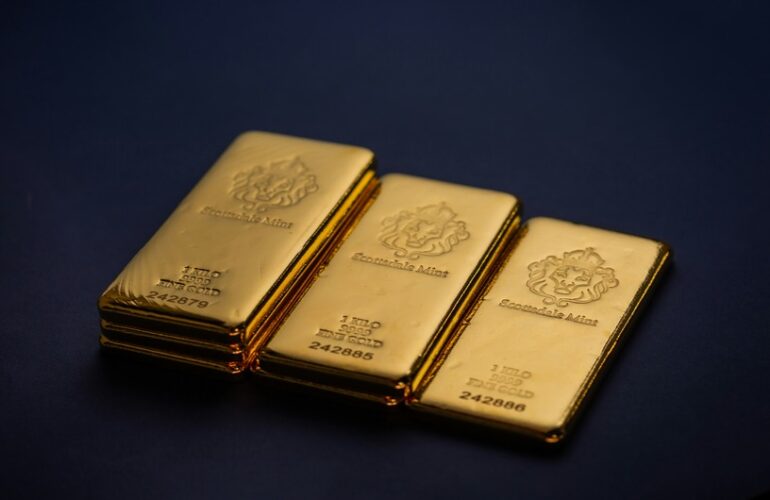
When you purchase from these origin-based refined gold sellers, you are buying an asset that has already crossed the threshold from raw material to financial instrument. The gold has been homogenized. Its impurities have been burned away, and it has been cast into standardized dore or high-purity bullion.
You still benefit from purchasing close to the geological source, but you bypass the metallurgical bottleneck. Moreover, you’ll enjoy a strict, mathematically advantageous discount to the LBMA fix. The asset is ready for immediate export and instant monetization upon arrival at its destination. Refined Gold Sellers.
Eliminating Metallurgical Risk
Beyond the velocity of capital, buying refined metal at the origin eliminates one of the greatest hazards of the commodity trade: metallurgical risk.
When purchasing raw gold, you’re inherently estimating the yield. Even with initial specific gravity testing or X-ray fluorescence (XRF) scans, raw dust contains unpredictable levels of base metals, moisture, and silicates. As a buyer, you might pay for 50 kilograms of raw dust. You may later find that, after refining, the actual pure gold yield is much lower than anticipated. This “melt loss” is a direct hit to the buyer’s bottom line.
Refined gold sellers absorb this risk entirely. By the time the product is offered to an institutional buyer, the supplier has already realized the melt loss.
The transaction is based on exact science. The buyer or their representative inspects a solid, homogenous bar. A core sample is taken and subjected to an independent, government-approved fire assay. If the assay shows the bar is 98% pure, the invoice is issued for exactly that gold content. There is no ambiguity, guesswork, or risk of unexpected post-export shrinkage. You pay only for verified, refined precious metal.
How Refined Gold Sellers Accelerate Global Compliance
Today’s system is heavily regulated. This means that an asset’s paperwork is scrutinized just as rigorously as its physical purity. Anti-Money Laundering (AML) laws and Environmental, Social, and Governance (ESG) mandates require a flawless chain of custody.
Moving raw, unrefined minerals across international borders frequently triggers enhanced scrutiny from customs authorities and destination refineries. It is inherently more difficult to prove the exact provenance of a bag of mixed gold dust than it is to document a serialized, refined bar.
Origin-based refined gold sellers streamline this compliance burden. Refining gold locally creates a clear, legally documented “transformation point.”
- Ethical Sourcing Validation: Before the gold is refined, the seller secures the International Conference on the Great Lakes Region (ICGLR) certificate. This provides proof that the raw material originated from conflict-free zones in the DRC.
- Sovereign Documentation: Once the refining is done, the local Ministry of Mines (e.g., the Ugandan DGSM) evaluates the processed bars. If satisfied, it issues formal export documentation based on the refined weight and purity.
- Tax Clearance: Local revenue authorities calculate royalties based on the refined, exact value, issuing an indisputable tax clearance certificate.
For the international buyer, this creates a smooth export environment. When the bullion arrives in Dubai, London, or New York, customs authorities are presented with a clean, formalized packet of sovereign documents tied to specific, refined bars. With this, you can expect immediate clearance, which accelerates your time-to-liquidity. Refined Gold Sellers.
The Operational Workflow for High-Velocity Procurement
To capitalize on this strategy, you must enforce a strict operational system. Engaging with a supplier who claims to sell refined gold starts with physical verification. The process is clear and structured:
Step 1: The Corporate Handshake
Negotiations begin with the exchange of a Letter of Intent (LOI) and a Full Corporate Offer (FCO). During this phase, verify the supplier’s Mineral Dealer’s License to ensure they possess the legal right to both refine and export.
Step 2: The Physical Audit (Table Top Meeting)
Do not purchase before you see. Travel to the origin hub or appoint a trusted proxy. The supplier will transport you to their secure vault or partnered refinery. That’s where you’ll physically audit the refined bars, verifying their homogeneity and weight.
Step 3: The Corroborating Assay
The gold may already be refined. This should not stop you from demanding a fresh assay before you pay. A sample is taken from the refined bar and tested at an independent laboratory. This confirms the supplier’s purity claims and finalizes the financial valuation.
Step 4: SWIFT Settlement and Secure Freight
Upon receipt of the assay and the government export permits, funds are transferred via corporate SWIFT channels. The refined gold is immediately handed over to international secure logistics providers (such as Brink’s or G4S) for insured transport to your final destination.
Because the metallurgical transformation occurred before the transaction, this entire workflow, from physical inspection to airborne export, can often be executed within days as opposed to weeks.
The Ultimate Procurement Strategy
The evolution of the East African gold trade has rendered the old procurement rules obsolete. Investors no longer have to choose between the deep discounts of the raw frontier and the safety of expensive Western markets. The localization of advanced processing infrastructure has created a new, highly efficient tier of commerce. Refined Gold Sellers.
When you strategically source from origin-based refined gold sellers, as an institutional buyer, you can lock in the mathematical advantages of upstream pricing while completely bypassing the time delays, yield risks, and compliance friction associated with unrefined commodities.
In a global economy defined by rapid fluctuations, capital velocity is your greatest asset. Never allow your funds to stagnate in a refinery queue. Buy at the source, but buy it refined.
Are you ready to accelerate your capital and eliminate metallurgical risk?
We provide institutional investors and wealth funds with direct access to processed, fully compliant gold from the Great Lakes region. Contact our executive trade desk today to review our refining infrastructure. You’ll also get the opportunity to explore our ICGLR compliance frameworks and discover how our sovereignly documented, refined bullion can optimize your precious metals portfolio.
Related Links
Estimated reading time: 8 minutes