Gold Dore Bars for Sale. In the complex field of trading commodities, the most lucrative phase of an asset’s lifecycle is the moment it changes from raw geological material into a financial instrument that you can scientifically measure beyond doubt. For institutional buyers, private wealth funds, and large-scale jewelry manufacturers navigating the precious metals supply chain, this principle dictates their entire procurement strategy.
Buying raw, unsmelted gold dust carries unacceptable metallurgical risks, while purchasing finished 99.99% pure bullion in Western financial centers requires surrendering the bulk of the profit margin to a long chain of intermediaries.
Secure the ultimate transitional asset. Discover why sophisticated institutional buyers target origin-based gold dore bars for sale to eliminate metallurgical risk, ensure compliance, and safely capture the upstream refining margin.
To bridge this gap and optimize their capital, the smartest actors in the global market actively bypass both extremes. Instead, they focus their procurement efforts exclusively on locating origin-based gold dore bars for sale.
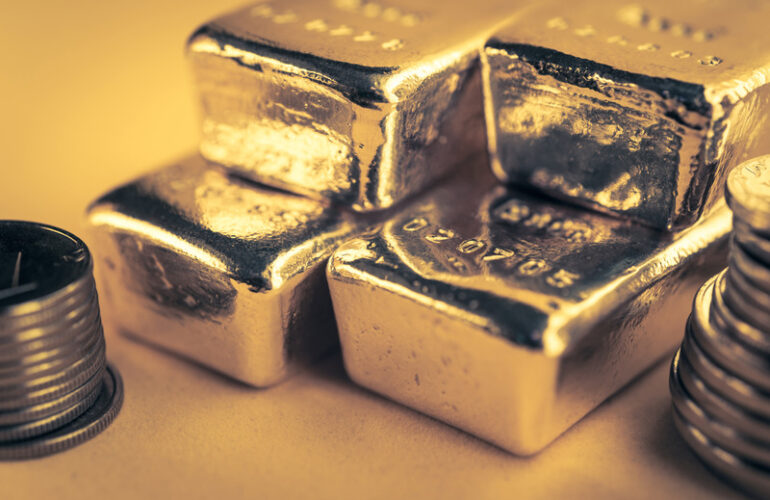
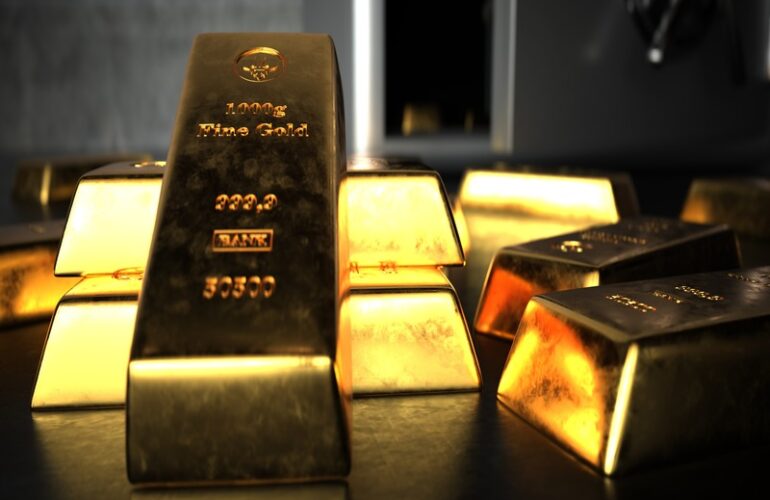
The Dore bar is the ultimate “transitional asset”. This is a semi-refined block of gold that has been stripped of its raw impurities and homogenized for accurate assaying, yet has not yet absorbed the premium costs of final-stage global refining.
When you source these bars directly from primary trade corridors, you can secure globally compliant assets at strict mathematical discounts to the spot price.
In this article, we will explore the economic mechanics of the Dore trade, the elimination of metallurgical risk, and the operational protocols required to successfully execute these high-value transactions.
The Financial Sweet Spot: Understanding the Value of the Dore Bar
To appreciate why institutional capital seeks out gold Dore bars for sale, you must understand the exact role this asset plays in the supply chain. A Dore bar (from the French doré, meaning “golden”) is a semi-pure alloy of gold. It typically contains trace amounts of silver, copper, and other naturally occurring base metals. In the East African corridor, owing to the exceptional geological quality of the DRC greenstone belts, these bars routinely test at naturally high purities of 92% to 96%.
The financial brilliance of the Dore bar lies in its state of processing. It represents the exact midpoint of the supply chain.
When you purchase a finished 24-karat bar from a Swiss or Emirati refinery, the price you pay is the London Bullion Market Association (LBMA) spot price plus a premium. That premium pays for the refinery’s overhead, branding, and profit.
Conversely, when you purchase a Dore bar at the origin, the pricing model is inverted. Because the bar still requires a final chemical refining process to reach 99.99% purity, origin-based suppliers offer it at the LBMA spot price less a negotiated discount.
For a corporate buyer with their own refining capacity, or a relationship with a destination refinery, this discount represents an immediate, structural arbitrage. You are buying the metal at a wholesale rate, absorbing the minor cost of final refining, and capturing the massive delta as pure profit.
Eliminating Metallurgical Risk at the Source
The primary reason professional procurement officers refuse to buy raw gold dust or nuggets is a phenomenon known as “melt loss.” Raw gold contains impurities, including moisture, silicates, and volatile base metals. These vaporize or separate as slag when exposed to extreme heat.
If a buyer purchases 50 kilograms of raw gold dust, they may find that after the initial smelting process, the resulting solid metal weighs significantly less. The buyer absorbs that loss entirely.
The search for gold Dore bars for sale is, fundamentally, a search for certainty.
When a legitimate supplier smelts raw gold into a dore bar, the melt loss occurs before the transaction is finalized. The extreme heat of the induction furnace burns away the soil, moisture, and volatile impurities. What remains is a solid, homogenous block of metal.
Because the bar is homogeneous, a core sample drilled from its center is chemically representative of the entire block. This allows an independent, government-approved laboratory to conduct a highly accurate fire assay.
If the assay dictates that the 10-kilogram dore bar contains exactly 94.2% pure gold, the buyer is invoiced solely for 9.42 kilograms of gold. There is zero guesswork, zero yield risk, and absolute mathematical precision. The metallurgical risk has been entirely absorbed by the supplier.
The Strategic Importance of Origin Infrastructure
Recognizing the value of dore is only the first step. Knowing where to source it safely is the strategic differentiator. Attempting to purchase dore bars in unstructured frontier zones introduces severe logistical and legal vulnerabilities. This is why the global trade has centralized around sophisticated, value-added transit hubs.
Kampala, Uganda, has emerged as the premier environment for this trade in East Africa. It acts as the vital commercial bridge between the vast, high-yielding extraction zones of the DRC and the global financial system.
When institutional buyers seek gold Dore bars for sale in Kampala, they are leveraging localized, world-class infrastructure. The city hosts state-of-the-art, government-sanctioned refineries that process the raw Congolese minerals into homogenous dore daily.
Furthermore, Kampala possesses the Tier-1 banking networks. This means they can easily clear high-volume SWIFT transactions and secure aviation logistics at Entebbe International Airport, enabling the export of the asset safely to global destinations such as Dubai, Istanbul, or Geneva.
You are acquiring the asset as close to the geological source as possible, without ever leaving the safety of a modern, regulated commercial environment.
Navigating the Global Market: How to Safely Evaluate Gold Dore Bars for Sale
The wholesale market incentivizes precision and penalizes assumption. If you consider that dore bars are a high-value transitional asset, you’ll realize that the market attracts unlicensed brokers who attempt to sell non-existent or un-exportable metal. To protect capital and ensure a frictionless export process, institutional buyers must evaluate potential suppliers based on strict compliance and operational criteria.
If you are evaluating origin-based gold dore bars for sale, your supplier must be able to seamlessly provide the following three pillars of compliance:
ICGLR Certification and Provenance
In the modern ESG-driven regulatory environment, a dore bar is a frozen asset if its origin cannot be proven. Legitimate suppliers in East Africa operate strictly in accordance with the International Conference on the Great Lakes Region (ICGLR) framework.
This certification guarantees that the gold was ethically sourced from conflict-free areas of the DRC. If you don’t have this document, major destination refineries will refuse to process your dore, effectively trapping your capital.
Sovereign Licensing and Tax Clearance
The entity offering the dore must hold a current, verifiable Mineral Dealer’s License issued by the national Directorate of Geological Survey and Mines (DGSM). Furthermore, they must demonstrate the financial capacity to pay the state royalties required for export.
If a supplier asks the buyer to advance funds to “pay the export taxes” before an assay has been completed, it is a definitive red flag indicating an undercapitalized or fraudulent operation.
Independent Assaying Authority
Never accept an assay report generated internally by the seller. Authentic suppliers always facilitate third-party verification. The dore bars must be transported to an independent, government-sanctioned laboratory for core sampling and fire assaying while the buyer or their representative observes.
The Institutional Execution Protocol
The physical execution of the trade is a highly choreographed process. It is designed to protect both the buyer’s capital and the supplier’s inventory. The standard operating procedure for securing origin Dore bars follows a strict, sequential workflow:
Phase 1: Digital Alignment
The buyer submits a Letter of Intent (LOI) outlining the required volume (e.g., 50 kg per month) and target purity. The supplier issues a Full Corporate Offer (FCO) detailing the discount to the LBMA spot price, the origin (DRC/Uganda), and the delivery Incoterms.
Phase 2: The Physical Audit
The buyer travels to the origin hub. A Table Top Meeting (TTM) is convened at the supplier’s secure facility or a partnered refinery. The buyer physically inspects the Dore bars to ensure they are solid and ready for sampling.
Phase 3: The Definitive Assay
The bars are weighed on calibrated scales and core-sampled. The samples are submitted for an independent fire assay. This test determines the exact weight of fine gold on which the final financial settlement will be based.
Phase 4: Sovereign Export and Settlement
Upon confirmation of the assay, the supplier secures the final customs clearances, tax receipts, and Export Permit from the Ministry of Mines. The gold is transferred to an international secure freight forwarder (e.g., Brink’s). It is only when the documentation is perfected and the asset is ready for secure export that the buyer releases funds via corporate SWIFT transfer.
Conclusion
The pursuit of margin in the global precious metals market requires moving past the retail structures of destination hubs and engaging directly with the industrial reality of the origin supply chain.
The gold dore bar is the physical manifestation of this strategy. By serving as the bridge between raw geological extraction and final global refining, it offers the institutional buyer the ultimate arbitrage: the upstream discount of the source, combined with the metallurgical certainty of a processed asset.
By strategically sourcing these transitional assets from East Africa’s regulated, highly developed trade corridors, intelligent capital can bypass intermediaries. They also guarantee ethical provenance and structurally optimize their procurement costs.
Are you ready to capture the upstream refining margin safely and securely?
We provide institutional capital, private wealth funds, and global manufacturers with direct access to fully assayed, ICGLR-compliant dore from the Great Lakes region. Contact our executive trade desk today. You will be able to review our sovereign licensing and explore our current inventory. Talk with us and discover the strategic advantage of sourcing your precious metals directly from the origin.
Related Posts
Estimated reading time: 8 minutes