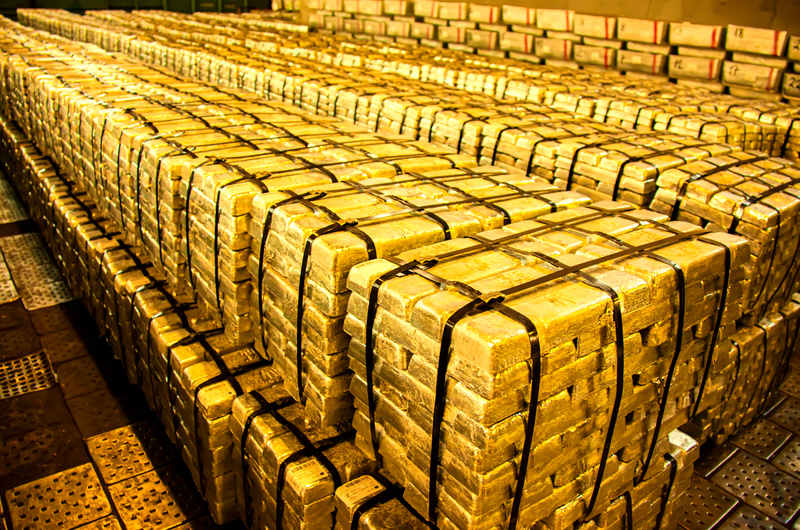
Gold Sellers In Dubai. In the architecture of global wealth, few locations command the reverence of the United Arab Emirates. As a global crossroads for capital, logistics, and luxury, Dubai has rightfully earned its moniker as the new “City of Gold.” However, for institutional capital, private wealth funds, and serious corporate procurement officers, navigating this glittering metropolis requires a stark realization of geographic reality:
Dubai mines absolutely no gold. Every ounce of bullion vaulted in the emirate was extracted from the earth thousands of miles away, before it was imported, refined, and marked up by a chain of intermediaries.
Maximize your precious metals margin by looking behind the curtain of the UAE market. Discover why institutional capital bypasses brokers and engages only with vertically integrated gold sellers in Dubai who control their own East African-origin supply chains.
As a result, when international buyers seek out gold sellers in Dubai, they frequently fall into a costly trap. They assume that by purchasing in a major global hub, they are securing a wholesale, origin-level price. In truth, the vast majority of entities operating within the Gold Souk or the free trade zones are tertiary brokers—dealers who purchase pre-refined metal from importers and resell it at a premium.
To capture true upstream margin within the UAE, sophisticated buyers must fundamentally change their vetting criteria. They must bypass the destination brokers and seek out the elite tier of vertically integrated gold sellers in Dubai—the corporate entities that physically control their own supply chains directly back to the primary extraction corridors of East Africa and the Democratic Republic of Congo (DRC).
In this article, we will dismantle the pricing illusions of the UAE market, explore the mechanics of supply chain compression, and define how to leverage origin-connected suppliers to secure bankable assets at mathematically superior margins.
Understanding the Dubai Premium: The Cost of the Middleman
To understand why traditional procurement in the UAE often erodes margins, one must examine the anatomy of a standard transaction in the emirate.
When a buyer approaches a standard bullion dealer or trading house in Dubai, they are quoted a price based on the London Bullion Market Association (LBMA) spot rate, plus a premium. If the buyer is purchasing high-volume, 99.99% pure commercial bullion, that premium might seem relatively small on a percentage basis. However, that price has already absorbed the cost of a massive, hidden supply chain.
Consider the journey of the metal before it reaches the Dubai dealer’s display case. It was mined in the greenstone belts of the DRC. It was sold to a local aggregator. Then it was moved to a transit hub, such as Kampala, Uganda, where it was exported by an origin trade house. It was flown via secure freight to Dubai International Airport. Finally, it cleared customs, was processed by a UAE-based refinery, and was finally sold to the dealer you are speaking with.
Every single corporate entity in that sequence extracted a profit. When you buy from tertiary gold sellers in Dubai, you are paying for the accumulated overhead of five different businesses. The “wholesale” price you are offered is merely a volume discount on a heavily inflated retail reality.
The Institutional Strategy: Vertical Integration
The most sophisticated capital operating in the UAE does not accept the standard Dubai premium. Instead, these buyers practice supply chain compression. They seek out the specific gold sellers in Dubai who actually own the upstream infrastructure.
These elite entities operate a dual-footprint model. They maintain a polished, compliant corporate presence in Dubai to facilitate international banking and final-destination handover, but their true operational engine is at the origin. They possess the sovereign Mineral Dealer’s Licenses in Kampala. They operate the induction furnaces and assay laboratories near the DRC border. They manage the secure logistics that fly the dore bars into the UAE.
By engaging with a vertically integrated supplier, the institutional buyer effectively collapses the supply chain. You negotiate with a Dubai entity, but you are receiving origin-level pricing, a strict mathematical discount to the LBMA spot price. This is because the supplier has eliminated regional aggregators, third-party export brokers, and independent importers. You capture the margin that is normally lost to the market’s fragmentation.
The East African Engine Powering Dubai’s Liquidity
To successfully execute this strategy, buyers must understand where the vertically integrated suppliers source their metal. While Dubai imports gold from across the globe, the most lucrative and high-volume trade corridor flows directly from East Africa.
The Great Lakes region, specifically the eastern DRC, is a geological powerhouse. It produces unrefined gold with exceptionally high native purities (often 92% to 96%). Because the DRC lacks the global financial integration required for direct mass export, Kampala, Uganda, has evolved into a sophisticated processing and export gateway for this wealth.
The most competitive gold sellers in Dubai are those who have built a seamless operational bridge to Kampala. They utilize Uganda’s regulatory sanctuary and world-class refining infrastructure to process the raw Congolese minerals into homogenous dore bars. These bars are then flown directly into Dubai for final refining into 99.99% investment-grade bullion.
For international buyers, this DRC-Kampala-Dubai corridor is the ultimate procurement channel. It combines the deep pricing discounts of the African source with the absolute financial security and global liquidity of the UAE.
Compliance as the Ultimate Differentiator
In recent years, the UAE government has implemented stringent regulatory overhauls to align its precious metals sector with global Anti-Money Laundering (AML) and OECD due diligence standards. The days of undocumented gold easily entering the Dubai market are over. Today, a supplier’s ability to clear customs and refine gold in the UAE depends entirely on the accuracy of their origin paperwork.
This regulatory environment ruthlessly separates legitimate trade houses from grey-market brokers.
When you vet gold sellers in Dubai, their compliance architecture must be your primary focus. A vertically integrated supplier controlling the East African corridor will possess the following documentation for every shipment:
- ICGLR Certification: Issued under the International Conference on the Great Lakes Region framework, proving the gold is conflict-free and ethically sourced from the DRC.
- Origin Export Permits: Sovereign documentation from the Ugandan Ministry of Energy and Mineral Development, proving all state royalties and export taxes were paid in full.
- Airway Bills (AWB): Generated by recognized secure freight forwarders (such as Brink’s or Transguard), they prove a direct, unbroken chain of custody from the Kampala vault to Dubai customs.
If a seller in Dubai cannot provide this upstream documentation transparently, they are likely sourcing from the grey market. Purchasing from such entities introduces severe risks, including frozen capital, rejected refining slots, and institutional compliance failures.
The Execution Protocol: Buying “FOB Dubai” vs “Origin Direct”
Engaging with a vertically integrated supplier offers flexible execution models depending on the buyer’s risk tolerance and capital structure. Sophisticated buyers generally utilize one of two operational protocols:
1. Sourcing at the Origin (CIF Dubai)
The buyer contracts with the supplier’s Kampala entity. The buyer travels to Uganda to witness the assay of the dore bars. Once the assay is confirmed and funds are placed in escrow or partially settled, the supplier executes the export, flying the gold Cost, Insurance, and Freight (CIF) to the buyer’s designated refinery in Dubai. This method offers the deepest discount relative to the LBMA spot price, as the buyer assumes a minor portion of the transit time.
2. Settling in the Destination (FOB Dubai)
The buyer contracts with the supplier’s Dubai entity. The supplier uses its own capital to fly the East African dore to the UAE, clear customs, and deliver it to a recognized UAE refinery. Consequently, the buyer physically inspects the gold in Dubai, witnesses the final assay, and settles the funds locally. While the discount to the LBMA spot is slightly less than buying at the origin—because the supplier absorbed the freight and timeline costs—it offers the buyer an entirely frictionless, localized transaction.
The hallmark of top-tier gold sellers in Dubai is the ability to deliver both execution models flawlessly, demonstrating total control over the asset from the African vault to the Emirati refinery.
Mastering the Supply Chain: The End of the Destination Premium
Dubai remains an unparalleled global hub for the monetization and vaulting of physical wealth. However, treating the city as a point of origin is a fundamental strategic error that erodes institutional margins. To generate true alpha in the bullion trade, investors must look beyond storefronts and tertiary brokers.
The most valuable asset in the UAE market is a direct, fully compliant bridge to the geological source. By aligning your procurement strategy with vertically integrated corporate entities that merge the financial security of Dubai with the deep upstream pricing of the Kampala-DRC corridor, you secure the ultimate arbitrage.
You no longer have to choose between the safety of the destination and the profitability of the origin. By partnering with the right supplier, you capture both.
Are you ready to look behind the curtain of the UAE market?
We operate a fully integrated supply chain that seamlessly connects East Africa’s primary extraction zones with the UAE’s global financial infrastructure. Contact our executive trade desk today to review our ICGLR compliance protocols. You will also get the opportunity to discuss our Kampala refining capabilities and discover how our vertically integrated operations can deliver superior margins to your procurement strategy.
Related Posts
Estimated reading time: 8 minutes